Top 10 Watercolour Techniques Every Animal Painter Should Master
- Vanessa Longthorn
- Jul 2, 2025
- 3 min read

Updated: 2 days ago
Watercolour is one of the most expressive mediums for painting animals. Its transparency, fluidity, and softness are uniquely suited to fur, feathers, and subtle shifts in tone. However, these same qualities can make watercolour challenging—especially when realism and detail are the goal.
Whether you paint pets, wildlife, or expressive animal studies, mastering the right techniques will dramatically improve your results. Below are ten essential watercolour techniques that every animal painter should understand and practise.
1. Wet-on-Wet for Soft Fur and Backgrounds
Wet-on-wet involves applying pigment onto damp paper, allowing colours to flow and blend naturally. This technique is ideal for:
Soft fur
Feathers
Atmospheric backgrounds
Gentle transitions between light and shadow
For animals with plush coats—dogs, cats, horses—wet-on-wet helps avoid harsh edges and keeps the painting natural and organic.
Tip: Use high-quality 100% cotton paper to maintain control and prevent backruns.
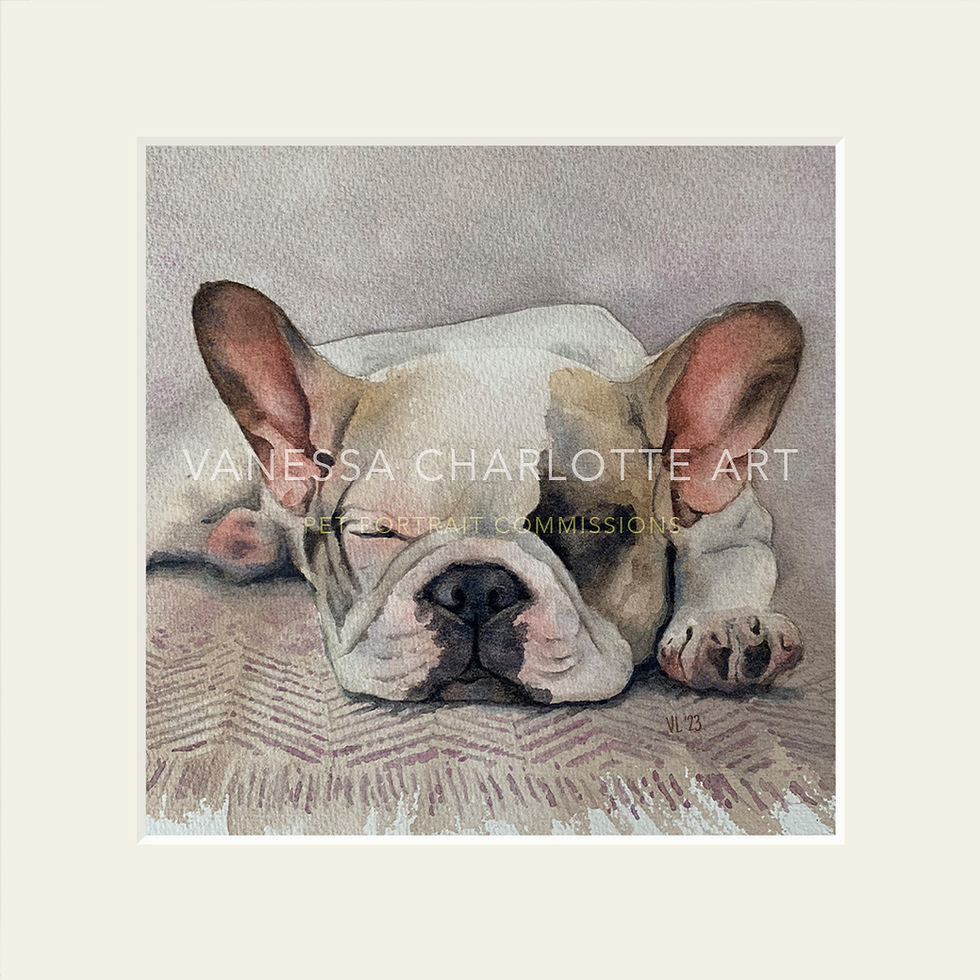
2. Dry Brush for Texture and Hair Definition
Dry brush is essential for creating the illusion of individual hairs. With minimal water and thicker pigment, the brush skips across the paper surface, leaving broken marks that mimic fur texture.
This technique works particularly well for:
Whiskers
Coarse fur
Feathers
Highlights on textured coats
Round brushes with a fine point are ideal for this stage.
3. Layering Glazes for Depth and Realism
Watercolour relies on transparency. Instead of one heavy application of colour, animal painters build depth through multiple thin glazes.
Each layer:
Enhances form
Deepens shadows
Preserves luminosity
Allow every layer to dry fully before adding the next to avoid muddy colours.
4. Negative Painting to Define Shapes
Negative painting involves painting around a subject rather than the subject itself. This is invaluable for defining:
Fur edges
Overlapping shapes
Light hairs against darker areas
It is especially effective for creating separation between body parts without outlining.
5. Feathering for Seamless Transitions
Feathering softens edges by gently pulling pigment into surrounding areas with a clean, damp brush. This prevents harsh lines and helps integrate shapes naturally.
Use feathering to:
Blend shadows into mid-tones
Soften facial contours
Create depth around eyes and muzzles
6. Salt and Splatter for Natural Effects
Used sparingly, salt and splatter can add organic texture to backgrounds or abstract wildlife pieces. Salt absorbs pigment and creates crystalline patterns, which can suggest:
Dust
Snow
Fur texture (when subtle)
Avoid using this technique in focal areas like eyes or noses.
7. Gradients for Form and Shadow
Smooth gradients are critical for rendering volume. Animals are rarely flat in tone—light wraps around form.
Practise gradients to:
Shape faces
Model muscles
Create believable lighting
This technique elevates realism dramatically.
8. Detail Work with Fine Brushes
Eyes, whiskers, eyelashes, and markings require precision. A high-quality fine brush with good snap is essential for this stage.
Less is more—overworking details can flatten the painting.
9. Colour Mixing for Natural Fur Tones
Animal fur is rarely one colour. Browns contain blues, purples, and greens; whites contain greys and warm shadows.
Pre-mixing natural palettes avoids chalky or flat results and keeps the painting cohesive.
10. Finishing with Highlights
Final highlights bring the painting to life. These can be achieved with:
Preserved white paper
Lifting pigment
White gouache used sparingly
Highlights should enhance realism, not overpower it.
Final Thoughts
Watercolour rewards patience and observation. By mastering these techniques, you build a toolkit that allows you to adapt to any animal subject—whether realistic pet portraits or expressive wildlife studies.
For artists looking to improve faster, investing in professional paper, brushes, and pigments makes a noticeable difference and is often more impactful than buying more colours.

$50
Product Title
Product Details goes here with the simple product description and more information can be seen by clicking the see more button. Product Details goes here with the simple product description and more information can be seen by clicking the see more button

$50
Product Title
Product Details goes here with the simple product description and more information can be seen by clicking the see more button. Product Details goes here with the simple product description and more information can be seen by clicking the see more button.
$50
Product Title
Product Details goes here with the simple product description and more information can be seen by clicking the see more button. Product Details goes here with the simple product description and more information can be seen by clicking the see more button.
